
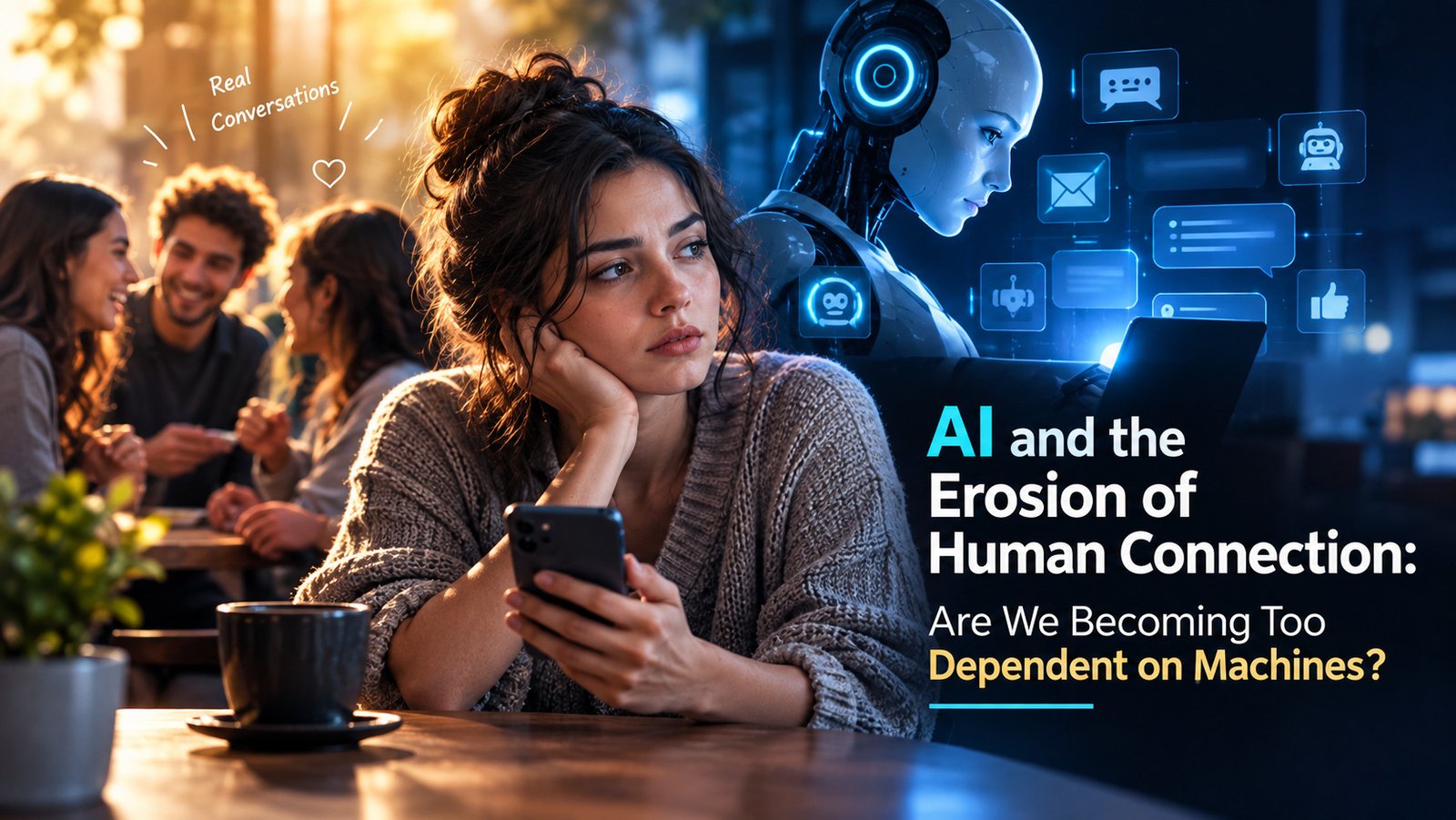
Think about the last time you called a company for help. Did a real person answer, or did you spend ten minutes talking to a chatbot before finally reaching someone who actually understood your problem? Now think about the last time you saw a child at a restaurant, quietly entertained by a tablet instead of chatting with the family around the table. Small moments like these are everywhere now, and they raise a question worth sitting with: are we slowly trading real human connection for the convenience of machines?
AI has made life faster, easier, and in many ways more efficient. But efficiency isn’t the same thing as fulfillment, and convenience isn’t the same thing as connection. Let’s take an honest look at what we might be losing along the way.
Chatbots Replacing Human Customer Service — and Even Companionship
It started with customer service. Simple, repetitive interactions got handed over to chatbots, and for the most part, that made sense — nobody misses waiting on hold for a password reset.
But the shift hasn’t stopped there. AI companionship apps have exploded in popularity, offering people a chatbot “friend” or even a romantic AI partner who’s always available, always agreeable, and never has a bad day of their own.
- Some people use these tools innocently, as a low-stakes way to practice conversation or simply pass the time.
- Others, particularly those struggling with loneliness, have described forming genuine emotional attachments to these AI companions.
- The concern isn’t that people are using these tools — it’s what happens when an always-agreeable AI becomes easier to turn to than the more complicated, sometimes messy work of human relationships.
The Mental Health Impact of AI Companionship Apps
There’s something genuinely comforting about a companion who never judges, never gets tired of listening, and never disagrees. But that comfort can come with hidden costs.
Real human relationships involve friction — disagreements, compromise, the need to consider someone else’s feelings. That friction, uncomfortable as it is, is often how we grow. An AI companion, by design, rarely challenges us the way another person naturally would.
Mental health professionals have raised concerns that over-reliance on AI companionship could:
- Reinforce social withdrawal rather than easing it
- Create unrealistic expectations for how “easy” relationships should feel
- Delay someone from seeking real human support during difficult times
None of this means AI companionship is inherently harmful. For many, it’s a helpful stepping stone or a source of comfort during a hard season. The concern is about replacement rather than supplement — when the AI becomes the primary relationship instead of a bridge back toward human connection.
Kids Growing Up With AI Tutors Instead of Teachers
Education is another area quietly being reshaped. AI tutoring tools can now explain concepts, answer questions, and adjust to a student’s pace far more patiently than a human ever could on a bad day.
That patience is genuinely valuable. But learning has always been about more than transferring information — it’s also about mentorship, encouragement, and the kind of human relationship that pushes a kid to believe in themselves.
- A great teacher notices when a student is struggling emotionally, not just academically.
- A great teacher celebrates a breakthrough moment in a way that feels personal and real.
- An AI tutor, however well-designed, can’t replicate that layer of human encouragement — at least not yet, and arguably not ever in quite the same way.
The risk isn’t that AI tutors exist. It’s a future where they quietly become the primary source of guidance for kids, gradually reducing the human mentorship that shapes confidence and character just as much as knowledge.
What We Lose When Machines Replace Human Interaction
It’s worth naming, honestly and without judgment, what tends to fade when AI steps in for a human role:
- Spontaneity — a real conversation can take unexpected, delightful turns that a scripted or predictive system rarely offers.
- Shared vulnerability — admitting you’re struggling to another person, and having them respond with genuine empathy, is a deeply human experience machines can’t authentically replicate.
- A sense of being truly known — over time, people who know us build context, memory, and understanding that goes far beyond what any AI profile can capture.
- Accountability — a human friend might gently call you out; an AI is generally designed to keep you comfortable and engaged.
None of this is a reason to fear or avoid AI altogether. It’s simply a reminder to notice when convenience starts quietly replacing something more meaningful.
Finding Balance Between Convenience and Connection
The goal isn’t to reject AI tools — that ship has sailed, and honestly, many of them genuinely make life easier. The goal is intentionality.
- Use AI for what it’s good at — quick answers, scheduling, drafting, repetitive tasks — and protect the time that’s freed up for actual human connection.
- Notice when convenience becomes avoidance. If a chatbot conversation is replacing a phone call you’ve been putting off with a friend, that’s worth paying attention to.
- Keep human mentorship central for kids, using AI tools to support learning rather than replace teacher relationships.
- Check in with yourself honestly about whether an AI companion is helping you build confidence for real relationships, or quietly becoming a substitute for them.
Small, intentional choices like these can help AI stay a tool that enhances life, rather than a replacement for the parts of life that matter most.
Conclusion
AI has genuinely made parts of life easier, faster, and more accessible — and there’s nothing wrong with appreciating that. But convenience has a way of quietly reshaping our habits if we’re not paying attention, and human connection is one of the easiest things to lose without noticing. The warmth of a real conversation, the encouragement of a mentor, the vulnerability of being truly known by another person — these are things no algorithm can fully replace. The healthiest path forward isn’t rejecting AI, but staying intentional about protecting the human relationships that give life its deepest meaning.
Frequently Asked Questions
1. Is it unhealthy to use an AI companion app? Not inherently. For many people, it’s a helpful tool for practicing conversation or easing loneliness. It becomes a concern mainly when it starts replacing, rather than supporting, real human relationships.
2. Can AI tutors fully replace human teachers? Unlikely in the near future. AI tutors are excellent for patient, repetitive explanation, but they can’t replicate the mentorship, encouragement, and emotional support a good human teacher provides.
3. Why do people form emotional attachments to chatbots? Chatbots are designed to be agreeable, available, and non-judgmental, which can feel comforting — especially for people experiencing loneliness or social anxiety.
4. How can I tell if I’m relying on AI too much for connection? A useful check is noticing whether AI interactions are supplementing your human relationships or quietly replacing effort you’d otherwise put into them, like reaching out to friends or family.
5. Is this trend likely to get better or worse over time? It largely depends on individual habits and awareness. As AI companionship tools become more advanced and available, intentional, mindful use will matter more than ever.